High sensitivity is an often misunderstood phenomenon that is particularly pronounced in children. These highly sensitive children differ from their peers through a deeper emotional perception and an increased sensitivity to external stimuli. Often, this overwhelms not only the children themselves, but also the adults in their environment.
Statements like "You're too sensitive" or "Don't exaggerate so much" are common reactions that cause highly sensitive children to learn to hide their feelings and adapt. However, this adaptation can come at a high price, as it permanently shapes their self-perception and how they interact with other people. In addition, the constant suppression of their sensitivity and the associated inner conflicts can lead to physical ailments.
In this post, I examine the challenges and consequences associated with suppressing high sensitivity and offer insights into a more sensitive approach to this topic.
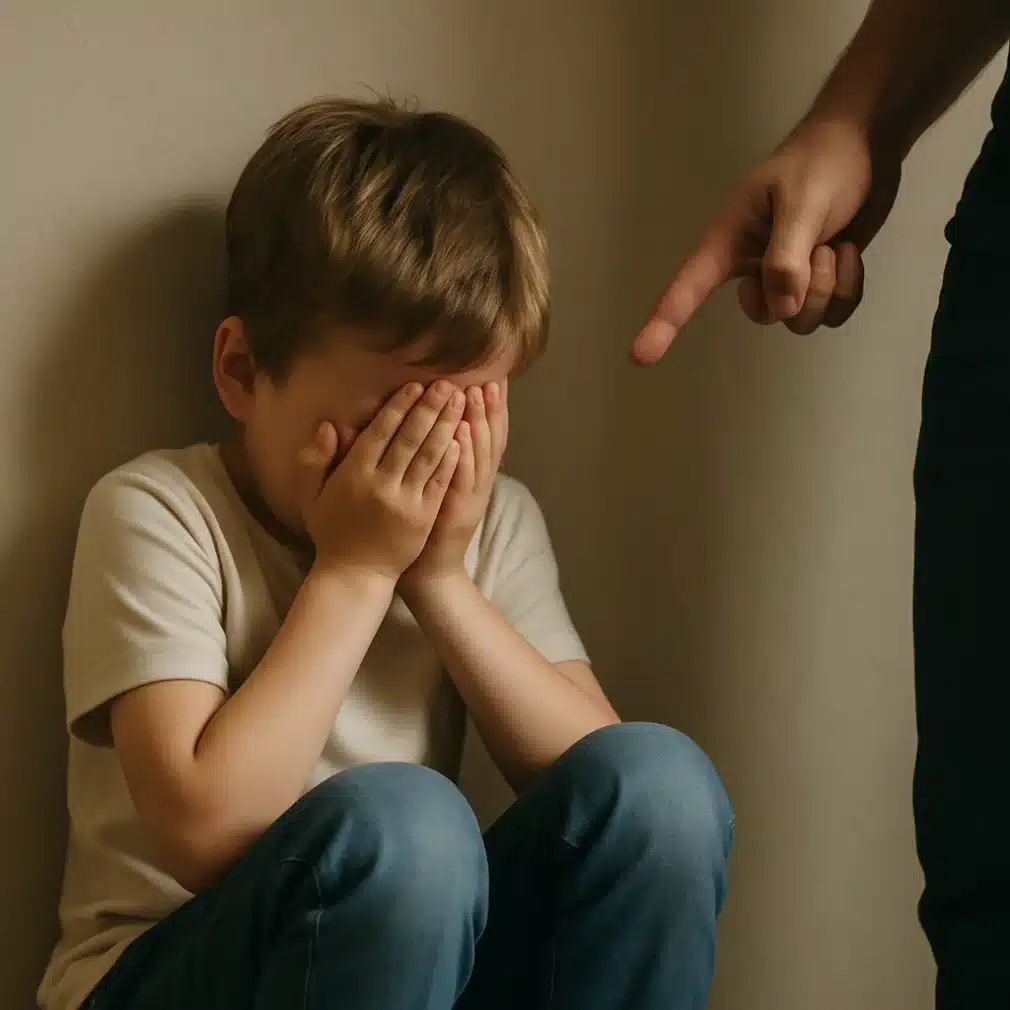
Suppressing highly sensitive traits – What happens when you constantly hold back?
For many highly sensitive people, expressing themselves and voicing their needs can be a challenge. Most highly sensitive individuals often sense that holding back their feelings and desires does not do them any good. They fight against themselves, which takes an immense amount of energy. This internal struggle is not only exhausting, but can also lead to psychological effects, such as Imposter Syndrome or People-Pleasing , all the way to developmental trauma.
When we hold back our potential, we not only suppress our emotions, but we also burden our nervous system. The pressure we exert on ourself can have physical effects, t that we often ignore.
Why do many HSPs suppress their feelings?
High sensitivity means a pronounced capacity for perception. Most highly sensitive people were mirrored in their childhood that this very perception is wrong. Parents cannot comprehend their children's reactions, and their feelings and needs are not taken seriously.
They perceive their children as sensitive and often try – partly out of concern – to regulate their child. This creates a feeling in the child of not being right.
If they show their intense feelings, for example when they are hurt or angry, parents begin to get annoyed and curb their child's temperament. As a result, children begin to swallow their anger. Highly sensitive individuals thus learn to hide their feelings because they experienced in their childhood that it is safer not to show emotions.
This can also affect positive feelings – for instance, when a child is overflowing with joy and is told to calm down. These patterns shape us in childhood, leading us to believe in adulthood that showing emotions could lead to conflict or hurt – or that they are inappropriate.
And so we began to adapt – with devastating consequences.
The article "suppressing high sensitivity" as a podcast or YouTube video.
Here you will find the podcast episode. Simply click on the link and start listening.
How did such experiences affect health?
If we were shaped this way in our childhood, we tend to control our feelings, which can lead to stress, headaches, or back pain. The feelings come, and what is unwanted is swallowed down.
Such experiences can have profound effects on their health. Most highly sensitive People sense that their special perception and sensitivity make them more vulnerable to physical effects does. They often suffer from illnesses that occur as a result of long-term psychological burdens occur, such as stress or anxiety. These challenges can lead to a noticeable Lack of energy lead, because the constant effort to adapt to the needs neurotypical people to adapt, takes a lot of energy. If that Nervous system becomes unbalanced, it is important to seek appropriate support.
Coaching and other support services can do a world of good in such moments, as they help find inner peace and develop ways to deal with one's own feelings. The return to balance is a crucial step in promoting both physical and mental health. By learning to recognize and respect their needs, highly sensitive people can significantly improve their quality of life.

How can a highly sensitive child learn to live their emotions?
Highly sensitive children can learn to live their emotions by growing up in a supportive environment where their feelings are taken seriously. It is important that they learn to understand their empathy and that they set boundaries to protect themselves. For this, it is essential that their feelings and needs are seen and accepted.
We learn to set boundaries when others accept our boundaries. It is important that parents signal to their child: You are okay just the way you are – with all your feelings and needs.
How can HSPs live authentically?
Highly sensitive people can live authentically by accepting themselves, allowing their feelings, and learning to communicate their needs clearly. Their ability to perceive is not hypersensitivity, but a strength. Neurotypical people are different – not worse, not better, just different. It is important that highly sensitive people do not have to conform to please others.
How can highly sensitive parents support their highly sensitive children?
Highly sensitive parents can support their highly sensitive children by having an open ear for their feelings and helping them understand their emotions. They should also learn how to guide their children in stressful situations to give them a sense of security.
My course "Understanding and Supporting the Highly Sensitive Child" can also support you with this.
Here you can get more information – just click here:
What are the signs that someone is highly sensitive?
Signs of high sensitivity include a strong susceptibility to external stimuli, intense emotional perception, the need to retreat into quiet environments, and a deep perception of feelings – both one's own and those of other people.
How does it feel when your nervous system runs on chronic stress?
Imagine your mind is a high-performance computer with thousands of open tabs. Sounds, moods, smells, energies – HSPs perceive them all, all the time. When you try to ignore these stimuli, an ongoing inner struggle arises. You feel tense, exhausted, sometimes simply "empty" without knowing why.
Perhaps you thought you were just overworked. But in truth, you are constantly trying to down-regulate your sensitivity – and that drains an incredible amount of energy from you while you ignore the painful feelings.

What happens to feelings you were never allowed to show?
Your emotions are deep like an ocean. If you have learned to swallow them down because they were "too much" for others, they pile up inside you. The result? You suddenly explode over minor things, get overwhelmed by seemingly baseless tears, or feel a rage that frightens you.
These outbursts are not a sign of weakness. They are the expression of your suppressed truth.
Why do you often feel alone despite being in company?
If you don't share your feelings and needs – out of fear of being "different" – you gradually build an invisible wall around yourself. You protect yourself from misunderstanding, but at the same time you prevent real connection. The result: You feel lonely even though you are surrounded by people who are your highly sensitive traits do not perceive.
And the tragic part? Many highly sensitive people often feel misunderstood. Many others perceive your distance, but do not understand why you react this way.
What is your body actually trying to tell you?
If your inner self is permanently ignored, your body begins to speak. Chronic exhaustion, stomach problems, tension pain, sleep disorders – all of these are often no coincidences, but messages from your nervous system that you should feel through. Your body is calling out: "Listen closely!"
He is not your enemy. He is your most honest ally.
What do you lose when you hide your superpower?
High sensitivity is not a weakness – it is a extraordinary strength : Empathy, intuition, creativity, depth. When you suppress them, you keep yourself away from the very gifts that distinguish highly sensitive people. You dare less, doubt yourself, and do not live the depth and fulfillment you actually long for.
Suppressing your high sensitivity makes you sick – and costs energy. You are not "too much". You are simply deeply connected to your sensitive nature. And precisely in that lies your potential.
Does it have to stay this way?
No. Clearly: No – that is a conscious choice that many highly sensitive people make.
Even if you have learned otherwise for years – you are allowed to stop hiding your vulnerability. You are allowed to accept what you are: highly sensitive, feeling intensely, deeply connected to the world and other highly sensitive people.

How does real change begin?
With a single, courageous step: acceptance.
“Yes, I am highly sensitive. And that is okay.”
This sentence can be the beginning of something great – not always easy, but healing.
It is about understanding that HSPs have special needs, what high sensitivity really means – and what it can do in your unique life.
What do you need to understand your high sensitivity?
Superficial information about sensory overload helps only to a limited extent, as it often fails to address the deep needs of highly sensitive people. What you need is a deep understanding of the many layers of your high sensitivity in order to thrive as a highly sensitive person –
how you think, how you feel, how you regulate yourself empathically and emotionally.
And that is exactly what you will learn in my course " Understanding high sensitivity „.
How would it feel to live your sensitivity as a strength?
In my course, we walk the path together:
You will learn not to hide your sensitivity anymore, but to understand it, use it, and live powerfully. You will develop strategies on how to protect yourself without compromising who you are. You will learn to read your body and trust your gut feeling.
It is time to show yourself – genuine and competent. Whole. And without fear of being "too much".
👉 Click here to learn more about the course and take your first step.
Are you ready to stop hiding?
You are not alone in your depth. You are not wrong. And you no longer have to conform to be accepted. You are allowed to be yourself – completely.
I look forward to accompanying you on your journey. 💛

You don’t have to go through this alone: In my Coaching for Highly Sensitive People we will tackle such topics together.